 angela
Predator inverter generators are worth buying for most home backup and recreational users, and the main reason is simple: you get dual-fuel flexibility and standard CO shutoff from a single retailer, Harbor Freight, at prices that sit well below what the established inverter brands charge. The trade-off is a short 90-day product warranty, which tells you where to focus your scrutiny before buying.
That warranty gap is the central question for anyone weighing a Predator. The emissions control system carries a 2-year warranty, but the generator itself gets only three months of coverage, so a defect that shows up in the first season of use is your window to find it. The lineup also spans a wide range, from the 5000W dual-fuel model, which runs on gasoline or propane, to the 9500W inverter, which runs on gasoline only. Picking the right one depends on your load, your fuel preference, and how much risk you’re comfortable carrying.
In our hands-on evaluation, we looked at how each model fits its intended job, from running essentials during an outage to powering tools and campsite gear. We compare the lineup, weigh price against value, and flag anything we can’t verify rather than guess. Our approach follows the same editorial independence standards we apply to every review, so the verdict below rests on what the evidence supports.
The Verdict: Strong Value on Watts Per Dollar, Weaker on Long-Term Support
Across the review sources we looked at, Predator keeps coming up as the category’s strongest option on watts per dollar. In our own hands-on evaluation, that held up: these units deliver a lot of output for what they cost, and the standard CO shutoff means you don’t give up a core safety feature to get there. For buyers who mostly care about capacity and budget, that combination is hard to argue with.
The catch is support. The product carries a 90-day warranty, and owners and reviewers describe limited help once that window closes. The emissions control system gets a longer two-year warranty, but that covers a narrow slice of what can go wrong. If a generator develops a fault in month five, you’re largely on your own, and that’s the real tradeoff behind the low entry point.
Who benefits most? Shoppers who want maximum power, live near a store, and are comfortable handling basic maintenance themselves. Occasional-use households and backup-power buyers fit well. Anyone who values a long warranty, a wide service network, or the option to buy from several retailers may want to look elsewhere, since Predator is sold only through Harbor Freight.
Predator Inverter Generator Lineup at a Glance
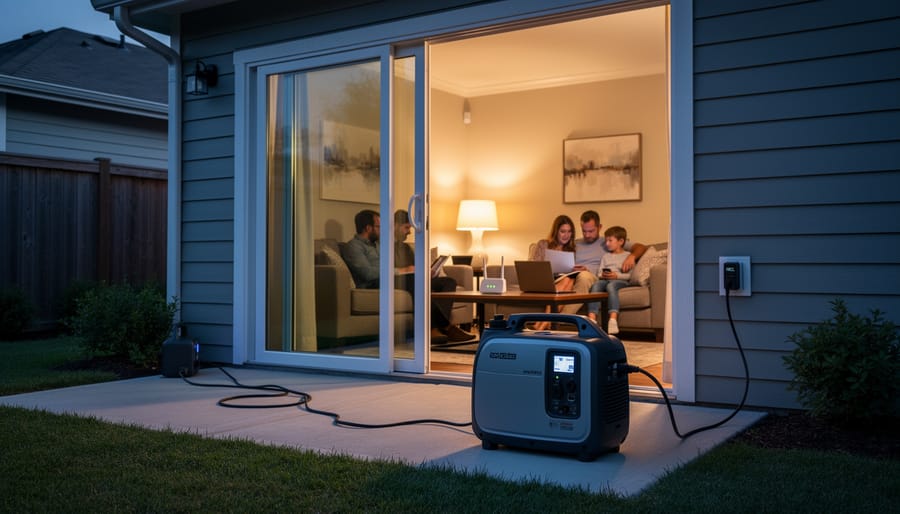
Small and Mid-Size Models: 1400W, 3500W, and 5000W Dual-Fuel
The smaller Predator inverters are the ones most buyers will actually move around, so portability is where they earn their keep. The 1400W class is the easy-carry option for camping, tailgating, and keeping phones and laptops charged during a short outage. If you want to see how Predator stacks up against the wider field, our full inverter generator review coverage puts each model in context.
Stepping up, the 3500W is the mid-size workhorse. It’s rated at roughly 11 hours of continuous runtime, but at 102 lbs it’s no featherweight. Plan on wheels or a helper when you load it into a truck, and treat the runtime figure as a manufacturer rating that shifts with load and fuel.
The 5000W dual-fuel is the interesting one. It runs on gasoline or propane, and that flexibility matters more than it sounds. Gasoline goes stale in storage and can gum up a carburetor, while propane keeps almost indefinitely in a sealed tank. For a backup unit that sits idle for months, having propane as an option means one less thing to worry about when the lights go out. Whichever fuel you choose, run it outdoors; CO shutoff is standard across the range, but it’s a backstop, not a substitute.
Large Models: 8750W and 9500W Super Quiet
At the top of the lineup sit the 8750W and 9500W Super Quiet inverters. Both are gasoline-only, so unlike the dual-fuel 5000W, you can’t switch to propane if you’d rather store a cleaner-burning fuel. That’s worth weighing if long-term fuel storage is a concern.
These units are built for partial whole-home backup and job sites. Think a furnace blower, refrigerator, well pump and a few circuits at once, or a crew running power tools without a utility hookup. In our evaluation, the 9500W felt like the more complete package for that role. It rides on wheels and has a folding handle, which matters because a unit this size is not something you want to carry. You can roll it out of a garage or across a work site the way you would a heavy toolbox on casters.
The “Super Quiet” label on the 9500W is a manufacturer claim aimed at people who need real output without a jackhammer-level racket in the yard. Like the smaller Predators, the larger models carry CO shutoff as standard, and they still have to run outdoors, well away from windows and doors.
The tradeoff is the same one that runs through the whole range: a 90-day product warranty. At this power level, that short window deserves real thought before you commit.
Price and Value: What You Get for $780 to $1,650
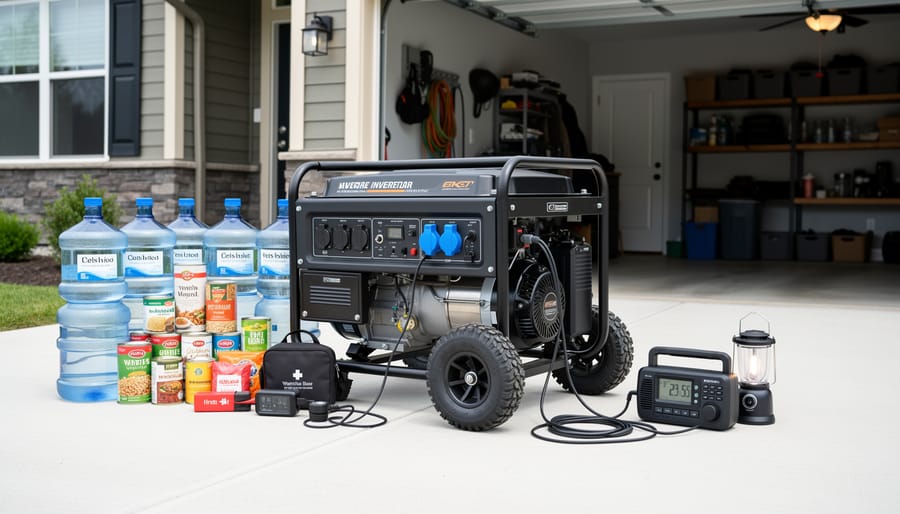
Predator’s verified price range runs from $780 to $1,650, and the two ends of that range tell you most of what you need to know. The 5000W dual-fuel inverter sits at the entry point at $779.99, while the 9500W inverter tops the range at $1,649.99. Prices move, so confirm the current figure at checkout rather than relying on any number printed here.
A common way to judge value is cost per watt. Divide the price by the rated output and you get a quick comparison across models and brands. It’s a useful starting point, and it explains why Predator tends to look strong in this category. But it’s only one factor. A generator with a low cost per watt can still be a poor fit if the runtime, noise level, or support doesn’t match how you’ll use it. Understanding rated vs starting watts matters here too, since a unit’s headline number may not reflect what it delivers continuously.
Here’s what we weigh beyond the sticker price:
- Watts per dollar, the headline value metric, though not the whole picture.
- Fuel flexibility, since the dual-fuel models run on gasoline or propane while the larger inverters use gasoline only.
- The 2-year emissions control system warranty, which covers one specific part of the machine.
- Single-retailer availability, because Predator is sold only through Harbor Freight.
- The 90-day product warranty, which shifts repair risk to you once that window closes.
That last point deserves honest attention. A short product warranty means any repair after three months is likely to come out of your pocket, which can erode the savings over the life of the generator.
Buying from one chain also shapes how you shop. You can’t easily price-match across multiple sellers or compare return terms between retailers, so the comparison work falls to you. Check the return policy before you buy, and weigh the upfront savings against the limited coverage that follows.
Performance: Output, Runtime, and Noise
Output is where Predator earns its reputation, so it helps to read the numbers correctly. Every generator lists two wattage figures: rated (running) watts, the load it can sustain continuously, and starting (surge) watts, a brief burst that covers the jolt motors draw when they kick on. A refrigerator, sump pump, or air conditioner can demand several times its running wattage for a moment, which is why the surge number matters for backup power. Size your purchase to the running figure, then confirm the surge rating covers your largest motor-driven appliance.
Runtime is the second thing to weigh. The 3500W model is listed at 11 hours of continuous operation, while the 9500W is listed at over 18 hours. Those are strong figures for the category, and the 18-hour class is long enough to carry a household through an overnight outage on a single tank. The dual-fuel 5000W adds flexibility, running on gasoline or propane, which is useful if you’d rather store fuel that keeps longer or want a backup when gas is scarce.
Noise is where the 9500W Super Quiet stands out. Its 67 dB rating is roughly the level of a normal conversation at close range or a running dishwasher, noticeably less intrusive than an open-frame generator. That’s tolerable at a campsite or job site, though you’d still hear it in a quiet backyard, and a rating taken at a set distance and load won’t match what you hear beside your house.
Portability varies widely across the lineup. The 3500W weighs 102 lbs, which is more than one person should casually lift, so plan on a ramp or a second set of hands when loading it. The 9500W compensates with a wheeled design and folding handle, making it far easier to move into position despite its size. Both electric and manual recoil starting are offered, and the recoil option is a useful fallback if the battery is dead after months in storage.
Safety Features and Warranty Coverage
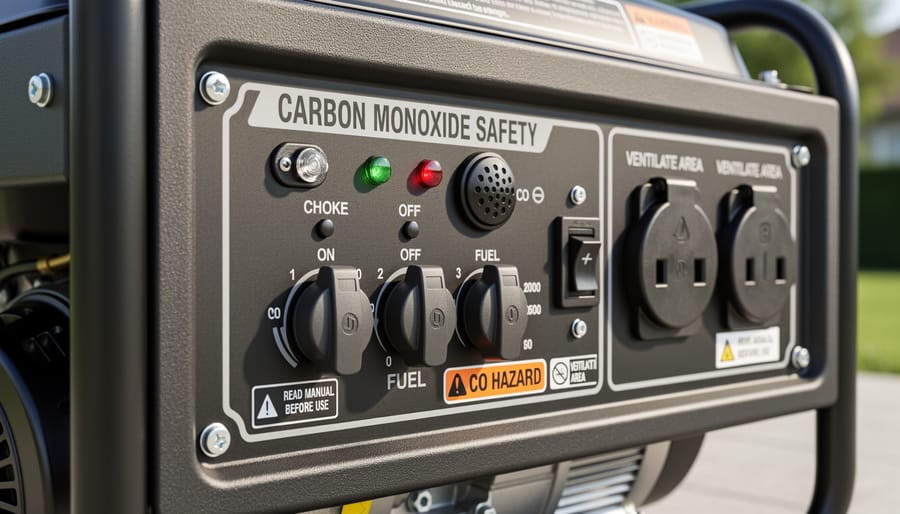
Every Predator inverter generator ships with carbon monoxide shutoff, which Predator brands CO SECURE. The system uses a sensor to monitor for rising carbon monoxide levels near the unit. If concentrations climb past a safe threshold, the engine shuts down automatically. That matters because carbon monoxide is odorless and colorless, and people often don’t realize they’re being exposed until symptoms set in. Still, a shutoff is a backup, not a license to get careless. It can’t replace safe placement.
Keep the basics in mind when you run any generator:
- Run the generator outdoors only, never in a garage, basement, shed or enclosed porch, even with the door open.
- Keep it well away from windows, doors and vents so exhaust can’t drift inside.
- Install a battery-powered CO alarm inside your home and test it before you need it.
- Shut the engine off and let it cool before refueling.
- Store fuel in approved containers, away from living spaces and ignition sources.
The warranty is where Predator asks for a compromise. Coverage runs 90 days on the product itself and 2 years on the emissions control system. Three months is short for a machine you may only fire up during an outage, since a fault could surface after the window closes. In our assessment, that is the main tradeoff behind the generator’s low price per watt.
Reviewers also report limited support after those first three months, so plan on handling problems yourself or paying for repairs. Because Predator units are sold through a single chain, Harbor Freight, you also have one point of purchase to work with. Run the generator soon after you buy it, so any defect shows up while you’re still covered. If a longer product warranty matters more to you, compare our WEN inverter generator reviews before you decide.
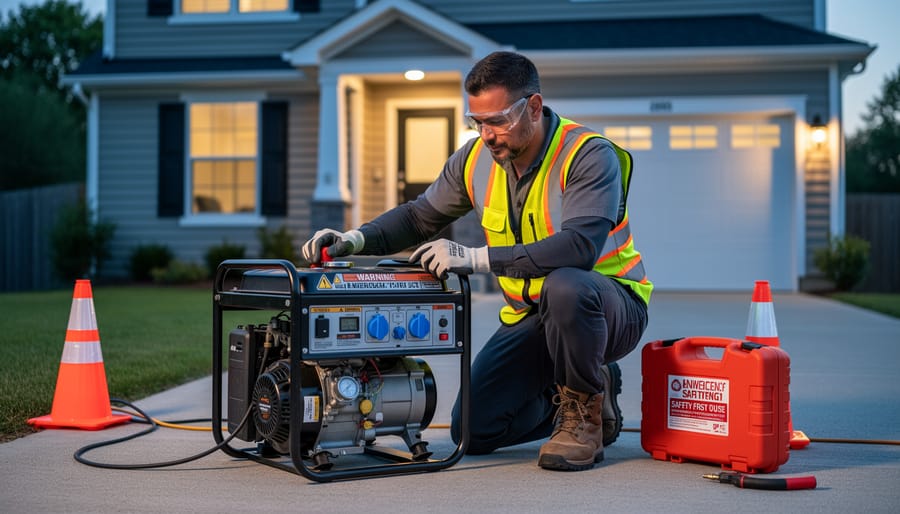
Who Should Buy a Predator Inverter Generator, and Who Should Skip It
In our evaluation, the Predator line fits a fairly specific buyer. The people who get the most from it are shoppers who want maximum output for the money and live near a Harbor Freight, since that chain is the only place these generators are sold. Occasional-use households and backup-power buyers also fit well. If a unit mostly sits in the garage until a storm knocks out the grid, a short warranty matters less than the watts you get for the money.
The dual-fuel models add a practical edge for that group. Being able to run on gasoline or propane gives you more options when storing fuel, and standard CO shutoff across the range is a sensible safeguard for anyone new to portable power.
The picture changes for buyers who put long-term coverage first. A 90-day product warranty is short, and the 2-year warranty covers only the emissions control system. Anyone who wants a nationwide service network, a choice of retailers, or a generator for heavy daily use should weigh that gap seriously.
Pros
- Strong watts per dollar compared with other inverter generators.
- Dual-fuel models run on gasoline or propane.
- CO shutoff is standard across the range.
- The emissions control system carries a 2-year warranty.
- A wide wattage range covers small loads through larger backup needs.
Cons
- The product warranty lasts only 90 days.
- Support after the first three months is limited.
- Predator generators are sold through just one retailer chain.
If you’re comfortable handling minor maintenance yourself and want the most output for your budget, Predator is a reasonable fit. If peace of mind and long-term service matter more than the savings, other brands may suit you better.
How We Evaluated These Generators
Our process starts with a simple rule: we only report what we can verify. For each Predator model, we compare the same dimensions side by side: price, rated and starting output, features, runtime, noise, portability, warranty, and availability. That keeps the comparison fair, and it lets you see where a model’s strengths come with a tradeoff.
Our findings rest on manufacturer specifications and on aggregated owner and review-source sentiment. We treat those two inputs differently. Specs tell us what a unit is designed to do, while owner feedback shows how it holds up in ordinary use, such as how easy it is to move, how it behaves at idle, and what support looks like after the sale. We also draw context from expert and buyer communities, whose firsthand experience helps us catch patterns that spec sheets miss.
Some limits matter here. Runtime and noise figures come from manufacturers, so they are not independent lab results, and real-world numbers shift with load, fuel, and conditions. We say so whenever a detail is unverified. Leeson is a nonprofit, and no retailer or manufacturer sponsors or influences our conclusions. If you want to see how Predator stacks up against cheaper alternatives, our look at budget inverter options uses the same approach.
Predator Inverter Generator FAQs
Are Predator inverter generators good?
They’re best known for strong output relative to price, which is the main reason buyers consider them. The tradeoff is a short product warranty and limited support after purchase, so they suit buyers who accept that risk.
Where are Predator generators sold?
Predator generators are sold through one chain, Harbor Freight. That makes comparison shopping across multiple retailers harder than with most brands.
What does the warranty cover?
The product carries a 90-day warranty, and the emissions control system carries a 2-year warranty. Once the 90 days pass, you should expect to handle most repairs yourself.
Do Predator generators have carbon monoxide shutoff?
Yes, CO shutoff is standard across the Predator range. It’s a useful backstop, but you should still run any generator outdoors and well away from windows, doors, and vents.
Can a Predator inverter generator run on propane?
The dual-fuel models can run on gasoline or propane, while the larger inverters run on gasoline only. Check the specific model before you count on propane.
How loud is the 9500W Super Quiet?
It’s rated at 67 dB. That’s roughly the level of a normal conversation at close range, though real-world noise shifts with load and distance.
How much do Predator generators cost?
Listings range from about $780 to $1,650. Prices change, so confirm the current figure on the product page before buying.
Across these answers, a pattern shows up. The questions buyers ask most are really about tradeoffs: low cost against thin coverage, big output against single-retailer availability. If one of those tradeoffs bothers you, that tells you more about fit than any spec sheet will.
Predator inverter generators stand out for how much output they deliver per dollar. The tradeoff is a 90-day product warranty and limited support once that window closes, so they suit buyers who value watts over long-term service coverage. If you’re comfortable with that and live near a Harbor Freight, the case for one is strong.
Before you commit, compare alternatives. Our other Inverter Generator Reviews cover brands with longer warranties and wider dealer networks, which may matter more depending on how heavily you’ll rely on the unit. Prices and specs shift, so confirm current pricing and the exact model details on the manufacturer’s listing at purchase. A few minutes of checking now beats a surprise at the register.