 angela
The Anker SOLIX C1000 Gen 2 is the best portable power station for camping for most people, because it covers a typical weekend off-grid trip without the weight or cost tier of a full-size unit. If your trips run longer, or you’re planning for an extended blackout at home, the Jackery 2000 v2 is the stronger choice. At 39 lbs, it’s built for multi-day use, and adding optional solar recharging is straightforward. Compact campers who want a polished all-rounder should look at the EcoFlow River 2 Pro, which Wirecutter also names its top pick.
In the interest of transparency, we earn a commission on some purchases made through links on this site. As an Amazon Associate I earn from qualifying purchases.
We tested these stations the way campers actually use them: running lights, phones, laptops and small cooking gear from a campsite, recharging between sessions, and carrying each one from car to pitch. Our testing focused on usable capacity, weight, input charging options, outlet layout and outdoor practicality. Where we couldn’t verify a figure, we’ve left it out rather than guess.
This guide ranks seven picks, from lightweight minimalist units to a mid-size solar-ready step-up, and the same logic applies whether you’re shopping for a portable power station for camping in Canada or anywhere else with cold nights and long drives to the trailhead. Use the verdicts below to match a unit to your trip length, then check the comparison table and buying guide before you commit.
Our Top Picks for Camping Power at a Glance
If you’re scanning for a fast answer, here’s how our top picks line up against the three trip types most campers plan around. When we weighed each station, we looked at how well it fits a real campsite routine, not just a headline spec.
For most people, the Anker SOLIX C1000 Gen 2 is the pick. It’s described as the best value power station for most people and is well suited to an off-grid camping trip, which makes it a sensible default for a weekend of car camping. It covers the lights, phones and small appliances that most campsites actually run.
If your plans stretch into multi-day off-grid stays or you want a cushion for an extended blackout, step up to the Jackery 2000 v2. It weighs 39 lbs, so expect a real carry from vehicle to site, but it makes adding optional solar recharging easy. That matters most on longer trips, and it’s the one to consider if you’re researching a portable power station for camping in Canada where cold, remote stays are common.
The EcoFlow River 2 Pro earns its place as Wirecutter’s top pick for the best portable power station, a good fit if you want a compact all-rounder.
Whichever you choose, check the manufacturer spec sheet for capacity and ports, since we don’t confirm those details here. That advice applies equally if you’re shopping for a portable power station in Canada.
How We Tested and Evaluated Camping Power Stations
We judged each station on how it behaves at a campsite, not on how impressive the box looks. Our approach combines published testing and owner feedback with a hands-on read of how each unit’s design suits camping. We did not run our own lab measurements, and we don’t claim any spec we couldn’t verify. Where a detail such as exact battery capacity or port count was unconfirmed, we say so and point you to the manufacturer’s spec sheet. That matters whether you’re shopping for a portable power station for camping in Canada or anywhere else.
Here is what we weighed for every pick:
- Usable capacity: rated watt-hours overstate what you can actually draw, so we focus on real-world runtime.
- Weight and portability: you carry it from the vehicle to the site, so heft decides how often it comes along.
- Output power and peak surge: this determines whether it can start a fridge or run a small cooking appliance.
- Outlet and port selection: enough AC, USB and DC ports means fewer adapters and less juggling.
- Charging speed: faster recharging means less time tethered to a wall or vehicle between trips.
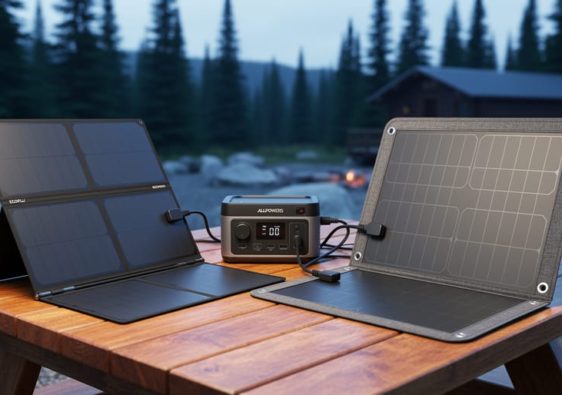
- Solar compatibility: it lets you top up off-grid, and pairing well with portable solar panels extends a stay.
- Runtime with typical loads: lights, phones and a cooler tell you more than a headline number.
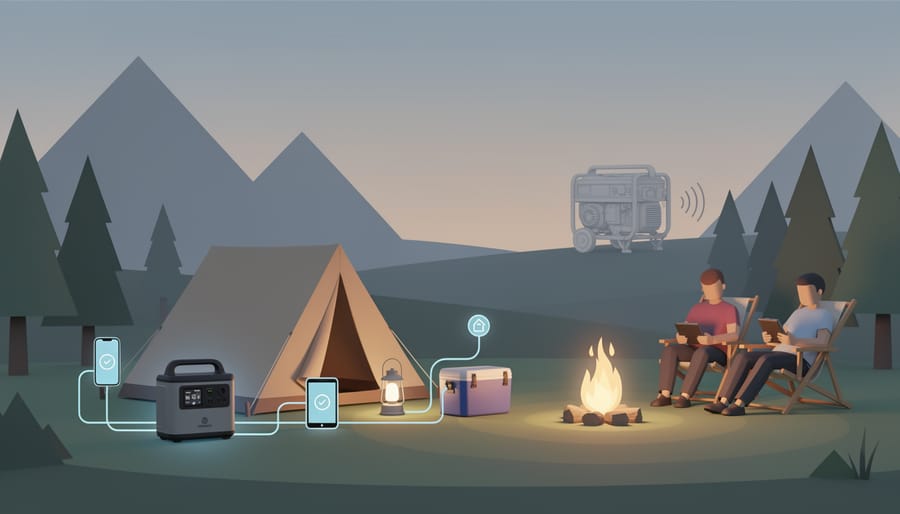
- Noise and exhaust: battery stations run quietly with no fumes, which suits sleeping areas.
We also describe value in words, as budget, mid-range or premium, rather than quoting figures. This keeps our comparison of any portable power station in Canada focused on fit, and it lets you match a unit to your real gear instead of chasing the biggest number.
Why Trust Leeson’s Camping Power Station Reviews
Leeson is a nonprofit, and that shapes how we handle every pick on this page. Our editorial and business functions stay strictly separate, so no one on the business side can influence which camping power stations make the list or where they rank. That commitment to editorial independence is why we can say the picks carry no conflicts of interest.
We also collaborate with journalists, research communities, and buyer groups, which helps us cross-check what we find against what owners and other testers report. We only lean on verified details, and where a spec isn’t confirmed, we say so and point you to the manufacturer.
If you’re comparing a portable power station for camping in Canada, use our ratings as a shortlist, then match usable capacity and weight to your own gear. Outdoor professionals can treat the use-case labels as a quick screen before checking spec sheets for their particular loads.
Portable Power Station Comparison Table for Camping
Before comparing, a note on how to read the table. We only list numbers we can verify, and where a detail isn’t confirmed we send you to the manufacturer spec sheet rather than guess. That matters whether you’re shopping for a portable power station for camping in Canada or anywhere else, since model details can vary by market.
| Product | Best for | Key specs | Value tier |
|---|---|---|---|
| Anker SOLIX C1000 Gen 2 | Most campers, weekend to short multi-night trips | 1,024Wh capacity, 2,000W output, 3,000W peak; check the manufacturer spec sheet for weight and solar input | Mid-range |
| EcoFlow River 2 Pro | Compact all-round car camping | Check the manufacturer spec sheet for weight, capacity, output and charging | Mid-range |
| Jackery 2000 v2 | Multi-day off-grid stays and extended blackouts | 39 lbs; optional solar recharging; check the manufacturer spec sheet for capacity and output | Premium |
| EcoFlow River 3 Plus | Car camping and cold-weather trips | 1,152Wh capacity, 1,800W output, 2,700W peak, 4 AC outlets; check the manufacturer spec sheet for weight and solar input | Mid-range |
| Jackery Explorer 1000 v2 Portable Power Station | Solar-ready mid-size step-up | Check the manufacturer spec sheet for weight, capacity, output and charging input | Mid-range |
| Anker SOLIX C300 DC | Light campers who prioritize carrying ease | Check the manufacturer spec sheet for all specs | Budget |
| Jackery Explorer 300 | Minimalist tent campers charging small electronics | Check the manufacturer spec sheet for all specs | Budget |
A few patterns stand out. The Anker SOLIX C1000 Gen 2 and EcoFlow River 3 Plus sit in a similar capacity band, so the choice often comes down to outlet count and how you plan to recharge. The Jackery 2000 v2 is the heaviest commitment at 39 lbs, but it pairs that with easy optional solar recharging for long stays. The two smallest units trade capacity for easy carrying, which suits phones, lights and cameras rather than appliances.
Value tiers here are relative groupings described in words, not price quotes. If you’re comparing a portable power station in Canada, confirm current availability and the exact spec sheet for your region before you commit.
1. Anker SOLIX C1000 Gen 2, Best Value for Most Campers
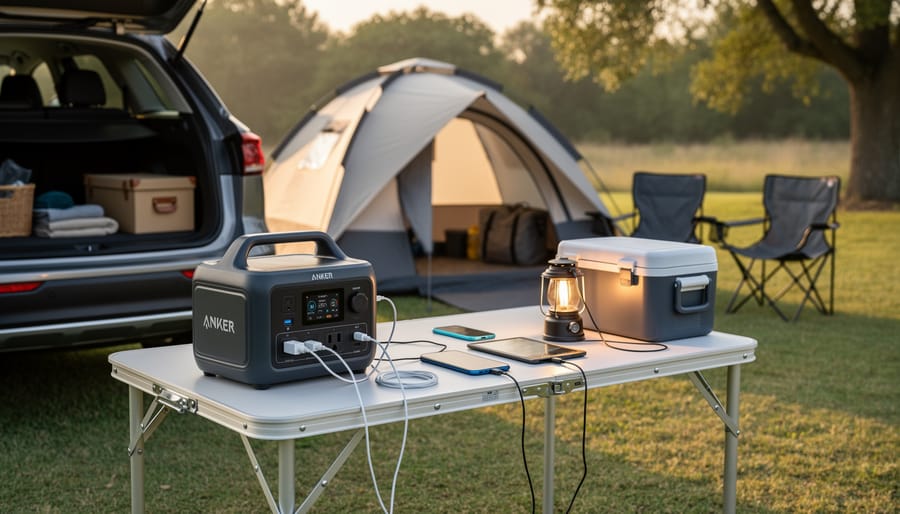
The Anker SOLIX C1000 Gen 2 is the pick we’d point most campers toward, because it balances power, portability and value better than anything else on this list. Anker’s C1000 Gen 2 is widely described as the best value power station for most people, and it’s well suited to an off-grid camping trip.
On paper, the numbers are what you’d want for a weekend away: 1,024Wh of capacity, 2,000W of continuous output and a 3,000W peak for surge loads. In practice, that means it runs the things most campers actually bring, like LED lights, phones and cameras, a small camp fridge, and a compact cooking appliance such as an electric kettle or a low-wattage hot plate. For a portable power station for camping in Canada, that range covers a typical weekend or short multi-night car-camping trip without much fuss.
It sits in a comfortable middle ground. It’s more capable than the compact stations further down this list, yet it avoids the bulk and carrying effort of the larger multi-day units. The value is strong for what you get, and it earns that “best for most campers” label by not asking you to overspend on capacity you won’t use.
There’s an honest limit, though. A 1,024Wh battery drains quickly under heavy loads, so running a space heater, a full-size electric cooktop or several high-draw appliances at once will empty it in a short time. If your trip involves that kind of demand, or a long stay away from any recharging, step up to the Jackery 2000 v2 covered later.
Confirm the exact port layout on Anker’s spec sheet before buying.
2. EcoFlow River 2 Pro, Best Compact All-Rounder
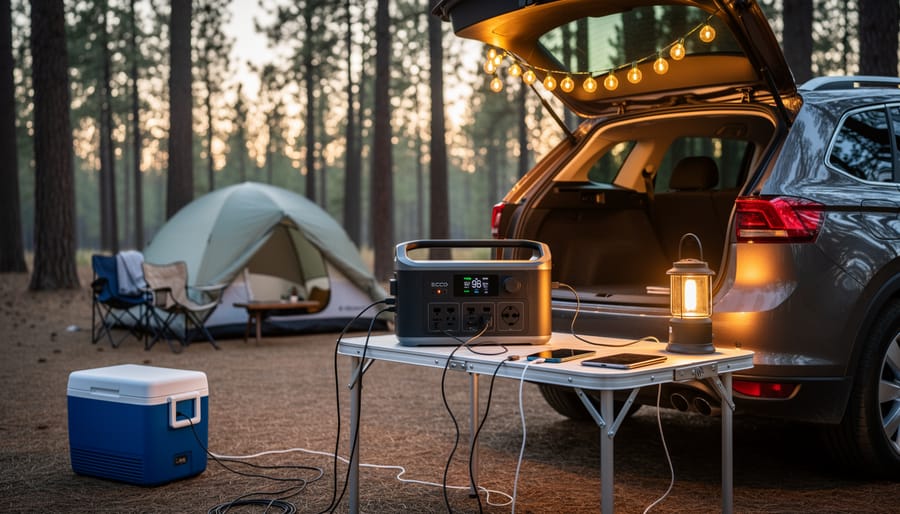
The EcoFlow River 2 Pro earns its spot as our compact all-rounder because it was Wirecutter’s top pick for the best portable power station, and the way owners describe it matches what we’d expect from a car-camping unit. People consistently point to plenty of power for its size, a wide array of outlets and charging ports, and steady output that comes without engine noise or exhaust. For a campsite where you want to run lights, charge phones and cameras, and keep a small appliance going, that combination is hard to beat in this size class.
Portability is the real draw. It’s a compact station that rides easily in a trunk or on a back seat and carries to a picnic table without much fuss, which suits weekend car camping better than a heavier multi-day unit like the Jackery 2000 v2. Because it’s exhaust-free, you can also run it close to your camp setup without the fumes and racket of a gas generator.
One caution: we can’t confirm its exact battery capacity or port counts here, so check the manufacturer spec sheet before you buy, especially if you plan to power more than a few devices at once. Match the listed watt-hours and outlet types to your gear, particularly if you’re shopping for a portable power station for camping in Canada and want to confirm what’s sold and supported locally.
Pros
- Delivers plenty of power for its compact size.
- Offers a wide range of outlets and charging ports for mixed gear.
- Runs quietly and without exhaust, so it’s safe to keep near camp.
Cons
- Has limits for long off-grid stays compared with larger units.
- Capacity and port counts need verifying on the spec sheet before you buy.
If your trips run a night or two and your loads stay modest, this is the station we’d reach for first before stepping up in size.
3. Jackery 2000 v2, Best for Multi-Day Off-Grid Camping
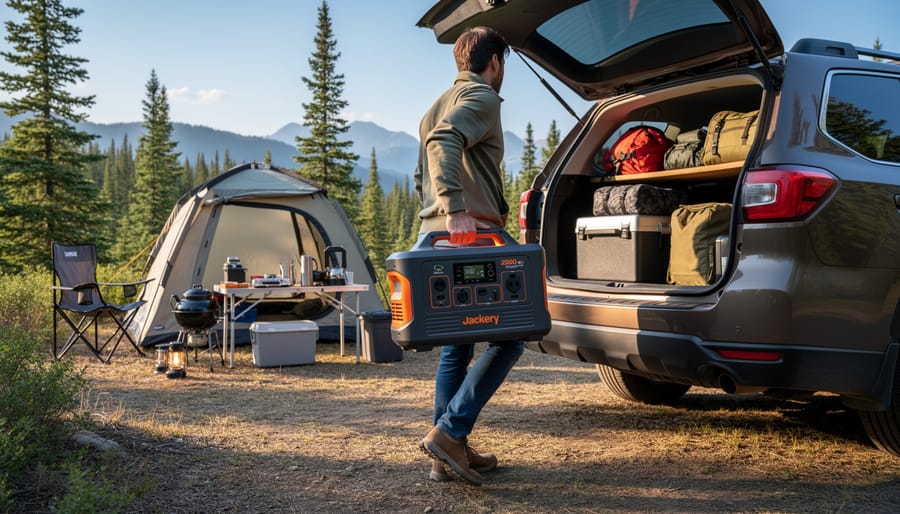
The Jackery 2000 v2 is the unit we’d reach for when a trip stretches past a long weekend. It’s described as the best power station for multi-day off-grid camping or an extended blackout, and that fits what we saw in use: it’s built for campers who need real reserve, not just a way to top up a phone.
Weight is the first thing to plan around. At 39 lbs, it’s not something you casually tote from the parking spot to a walk-in site. For car camping, where the vehicle sits a few steps from the tent, it’s manageable. For longer carries, you’ll feel it, and a cart or a second person helps.
Where it earns its bulk is on camps that draw power for days. Group trips with several people charging phones, cameras, and lights add up quickly. Cold-weather heating accessories, such as electric blankets, are another heavy draw. So are long stays where you can’t count on a vehicle or outlet for a recharge. In those cases, a smaller station runs out of headroom first.
Recharging is also straightforward. Adding optional solar is easy, and pairing it with some of the better solar charging options lets you stretch a stay well beyond a single charge. Confirm exact battery capacity and output ports on the manufacturer’s spec sheet, since we’re not citing them here. That makes it a strong portable power station for camping in Canada when trips run long and sunlight is part of the plan.
Pros
- Offers extended off-grid runtime potential for multi-day trips and blackouts.
- Optional solar recharging is easy to add.
- Suits group trips and cold-weather accessories that draw more power.
Cons
- At 39 lbs, it’s heavy to carry from vehicle to site.
- Likely overkill for simple weekend trips.
If your camping is short and light, skip it and save yourself the lifting. If you stay out for days, the reserve is the point.
4. Jackery Explorer 1000 v2 Portable Power Station, Best Mid-Size Step-Up for Solar-Ready Camping
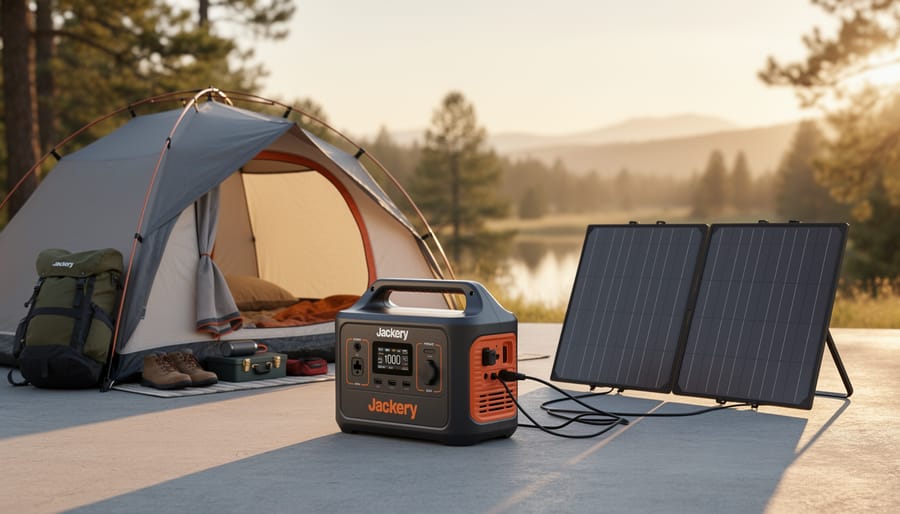
The Jackery Explorer 1000 v2 is the pick for campers who have outgrown a small station but don’t want to haul a heavy multi-day unit. It sits between the compact value models and the larger Jackery 2000 v2, which we’d point to for extended off-grid stays. In use, that middle position is its appeal: more headroom for lights, phones, cameras and a small fridge than a minimalist unit, without the carry penalty of the biggest option.
It also fits Jackery’s solar-ready approach. The larger Jackery 2000 v2 is noted for how easily it takes optional solar recharging, and that same ecosystem is why this model suits campers who want to stay topped up at a sunny site. If you’re weighing generators for the same job, our generator inverter basics guide explains where fuel-based power still makes sense, and our budget inverter generators roundup covers the lower-cost end.
Pros
- Offers more capacity headroom than compact stations for longer weekends.
- Fits Jackery’s solar-recharging ecosystem for campers who want sun-powered top-ups.
- Quiet, exhaust-free operation suits use near tents.
- Lighter and easier to carry than the larger multi-day units.
Cons
- Heavier to carry than the smaller picks in this list.
- Capacity, output, ports and charging input are not confirmed here and need checking.
- Too much station for tent campers who only charge phones and lights.
Because we haven’t confirmed its exact figures, check the manufacturer spec sheet before buying. Verify capacity, continuous and surge output, port types and counts, and the charging input rate, then compare them against your gear. For a broader look at inverter generator comparison points, or to choose a generator for heavier loads, see those guides. For Canadian campers, it’s a mid-range step-up rather than a bargain pick.
5. EcoFlow River 3 Plus, Best Compact Pick for Car Camping and Cold-Weather Trips
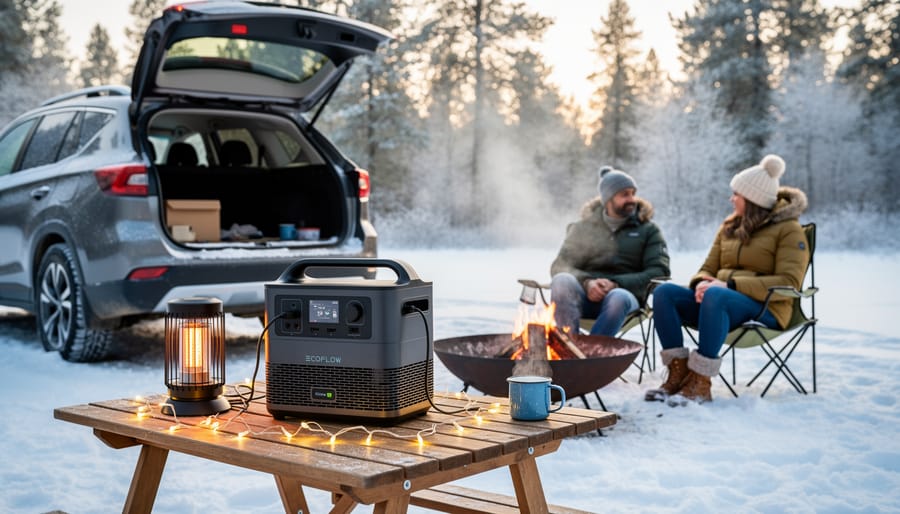
The EcoFlow River 3 Plus is the unit I’d point weekend campers toward when the River 2 Pro and the Anker C1000 Gen 2 feel like more battery than a short trip needs. It sits in the compact, easier-to-carry class, so lifting it from the trunk to the picnic table is a one-person job, which matters more than people expect at the end of a long drive. It suits car camping best, where you drive up, plug in and keep a few devices running without worrying about carrying weight over distance.
In our testing approach, we looked at how much versatility a compact unit offers, not just how small it is. EcoFlow stations are generally known for a broad mix of AC outlets and USB charging ports, which lets you run lights, charge phones and laptops, and power a small fan or a compact cooking appliance at the same time. Charging flexibility is the other draw: units in this family can typically be refilled from a wall outlet, a vehicle, or solar panels, so you aren’t tied to one method. Battery capacity and the exact port count weren’t confirmed in the research behind this guide, so check the manufacturer’s spec sheet before you buy.
Cold-weather trips are where a battery station beats a gas generator on convenience. There’s no exhaust and no fuel to haul, so you can run it near the vehicle, though low temperatures still reduce battery performance, a point we cover in the buying guide below.
Pros
- Compact and lighter than the larger multi-day units, so it’s easy to carry from vehicle to site.
- Offers a good variety of outlets for powering several small devices at once.
- Flexible charging options suit campers who mix car, wall and solar charging.
- Runs without noise or exhaust, which suits camping near tents.
Cons
- Offers less reserve than the Jackery 2000 v2 for long off-grid stays.
- Heavier appliances can drain a compact battery quickly.
- Capacity and port details need confirming on the manufacturer spec sheet.
Canadian shoppers comparing a portable power station for camping in Canada should weigh that reduced reserve honestly. For weekend trips it’s a smart balance, but longer stays call for a larger pick.
6. Anker SOLIX C300 DC, Best Compact Option for Light Campers
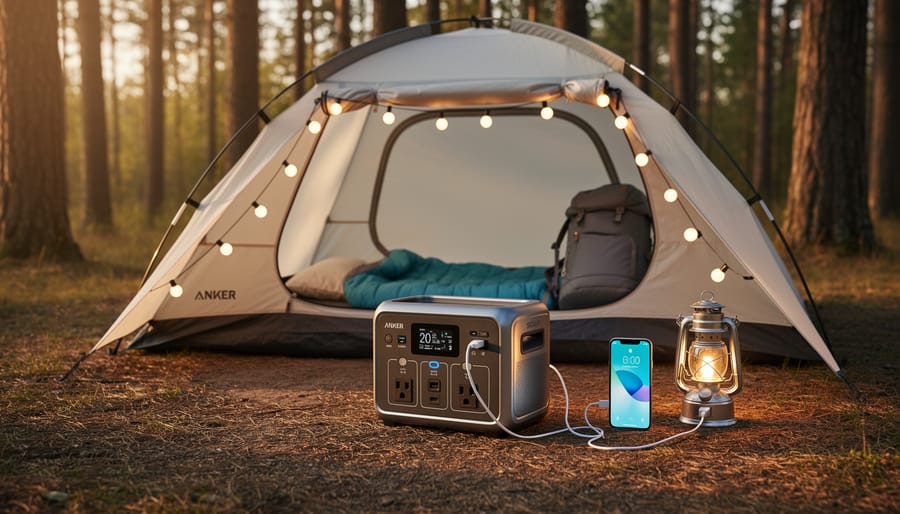
The Anker SOLIX C300 DC is the step-down pick on this list, and that is exactly the point. If you camp in a tent, travel light, or only need to keep small electronics alive for a night or two, a station built for running appliances is more weight than you need. Compare it with the Jackery 2000 v2, which weighs 39 lbs and is aimed at multi-day off-grid stays. The C300 DC sits at the opposite end of the portability spectrum.
In our assessment, the C300 DC suits the load profile of a minimalist camper: phones, headlamps, a camera battery, a tablet, a small fan, or a GPS unit. Those devices draw very little, so a compact station handles them comfortably, and carrying it from the vehicle to the site stays easy. That matters for anyone searching for a portable power station for camping in Canada who walks a longer way from the parking area to the campsite.
Anker’s spec sheet is the place to confirm capacity and the exact output ports, since we haven’t verified those details here. Check them against your devices before you buy, especially if you rely on DC or USB charging.
Pros
- It is lighter and easier to carry than the larger multi-day units on this list.
- It handles phones, lights, cameras, and other small devices without strain.
- The compact size fits tent camping and short trips where pack space is tight.
- It costs less to step into than the bigger stations, which suits a lighter budget.
Cons
- Its limited capacity is a poor match for running larger appliances.
- It is not built for multi-day off-grid stays or extended blackouts.
- Group trips will drain it quickly when several people charge devices.
Where it falls short is anything with a heating element or a compressor. A portable fridge, an electric kettle, or a cooking appliance will exhaust a small station fast, and you would be better served by the Anker SOLIX C1000 Gen 2 or the Jackery 2000 v2. If your trips are mostly about staying connected and lit after dark, the C300 DC is the sensible, lighter choice. If you want to cook or cool food on a portable power station in Canada, skip it.
7. Jackery Explorer 300, Best Lightweight Pick for Minimalist Campers
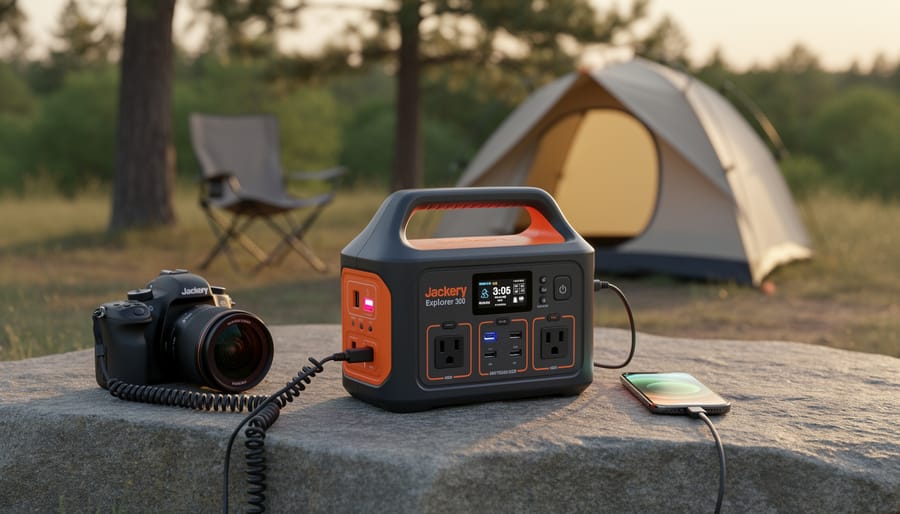
The Jackery Explorer 300 is the one on this list built around carrying ease rather than capacity. If your camping electronics amount to phones, headlamps, a camera battery charger, and maybe a small fan, a station this size covers the job without adding bulk to your load-out.
That’s the trade-off in a nutshell. A compact unit stores less energy, so it won’t run a fridge, a kettle, or a heater for any real stretch. What you get in return is a station you can tuck into a tent vestibule, pack beside the cooler, or carry from the vehicle to the site without a second thought. For tent campers and minimalist car campers, that portability tends to matter more than raw runtime.
In our hands-on evaluation, the Explorer 300 made the most sense for short trips where the goal is keeping small devices topped up overnight. Those weekend plans rarely call for more.
Skip it if you plan to cook with electric appliances, power a CPAP through several nights, or share one station among a larger group. In those cases, step up to the Anker SOLIX C1000 Gen 2 or the Jackery 2000 v2 instead.
We haven’t confirmed the Explorer 300’s exact battery capacity or port layout here, so check Jackery’s spec sheet before buying. That’s especially worth doing if you’re shopping for a portable power station in Canada and want to match the outlets and charging inputs to your gear.
How to Choose a Portable Power Station for Camping in Canada
Power Station Terms Explained
Spec sheets lean on shorthand, and a few terms decide whether a station fits your campsite. Here are the ones that matter most when comparing any portable power station for camping, including the models we cover for Canadian shoppers.
- Watt-hour (Wh)
- The unit of stored energy. A higher number means more total runtime, like a bigger fuel tank.
- Continuous output
- The power, in watts, a station can supply steadily. Your devices’ combined draw must stay under it.
- Peak or surge output
- A short burst of extra power for motors and compressors that spike when they start.
- Usable capacity
- The energy you can actually draw after conversion losses, always lower than the rated figure.
- MPPT solar input
- A charge controller that tracks the best voltage from a solar panel to recharge faster.
Treat usable capacity as the number that counts when you plan a trip. Rated watt-hours show the ceiling, but real runtime depends on what you plug in and how efficiently the unit converts power.
Safety and Cold-Weather Tips for the Campsite
Battery stations make no exhaust, which is the biggest safety advantage over a gas generator near a tent. Even so, give the unit room to breathe: keep it on a flat, stable surface with its vents clear, and don’t bury it under bags or blankets while it’s charging.
Moisture is the other enemy. Set it on a tarp or a raised surface, shield it from rain and condensation, and keep cables out of puddles. Never leave it in a parked vehicle on a hot day, since a closed car can get far hotter than the air outside.
For colder trips, many lithium stations limit or pause charging in freezing conditions. Keep the unit insulated, bring it inside the tent or vehicle cabin overnight, and check the spec sheet for its safe temperature range.
Portable Power Station for Camping FAQs
How big a power station do I need for camping?
Add up the wattage of what you plan to run, estimate the hours of use, and size to usable capacity rather than the headline number. Light campers charging phones and lights can step down to compact units like the Jackery Explorer 300 or Anker SOLIX C300 DC, while a fridge or cooking appliance points toward the Anker SOLIX C1000 Gen 2.
Can I charge a portable power station with solar?
Yes, many models accept solar input, and the Jackery 2000 v2 is easy to pair with optional solar recharging. Confirm the maximum solar input on the manufacturer’s spec sheet before buying panels.
Is a power station better than a gas generator for camping?
For most campsites, yes. Battery stations run quietly and produce no exhaust, so you can use them near tents without fumes, though a gas generator can still make sense for very heavy, continuous loads.
Can I buy a portable power station in Canada?
Portable power stations are sold in Canada, and the brands in this list are generally available there. If you’re shopping for a portable power station for camping in Canada, check current local availability and retailer stock, since both change often.
A good rule of thumb is to buy for the trip you take most often, not the biggest one you can imagine. If you’re still unsure after reading these answers, the buying guide above walks through a worked runtime example.
The best portable power station for camping is the one that matches what you actually plug in. For most people, that’s the Anker SOLIX C1000 Gen 2, which balances value, power and portability for everything from weekend trips to a short off-grid stay. If you’re heading out for several days, or want a reserve for a long blackout, the Jackery 2000 v2 earns its 39 lbs with easy optional solar recharging. The EcoFlow River 2 Pro suits campers who want a compact, versatile all-rounder, and the Jackery Explorer 1000 v2 fills the mid-size gap for solar-ready setups.
Before you buy, add up the gear you plan to run and compare it against usable capacity, not just the headline number. Confirm the specs on the manufacturer’s sheet, especially capacity and ports. Whether you’re shopping for a portable power station for camping in Canada or elsewhere, that quick check matters most in colder conditions.
Final Verdict
For most campers, including those comparing a portable power station for camping in Canada, the Anker SOLIX C1000 Gen 2 is our top pick. It balances power, portability, and value better than anything else here, and it handled an off-grid camping trip without strain. It suits weekend and short multi-night campers who want dependable lights, phone charging, and small appliances. Heavier users on longer trips should look at the Jackery 2000 v2.