 angela
For most Canadians, the ALLPOWERS 400W Foldable Solar Panel SP037 is the best portable solar panel for off-grid use in 2026, because it packs the most wattage into a folding format you can still carry to a campsite, cabin or job site. If your priority is pairing a panel with a power station and keeping things light, the EcoFlow 110W Portable Solar Panel is our pick for portability.
In the interest of transparency, we earn a commission on some purchases made through links on this site. As an Amazon Associate I earn from qualifying purchases.
That’s the short version. The longer one depends on what you’re charging and how far you’re hauling it. Wattage sets how quickly a panel can refill a battery, but it also sets the weight and the folded size you’ll live with. A high-output foldable panel suits extended off-grid stays. A compact 100W to 200W panel suits weekend trips and smaller power stations, and the Renogy 100W Portable Solar Suitcase and Anker SOLIX PS200 200W Portable Solar Panel cover those cases, with charge-controller flexibility and mid-size station pairing as their strengths.
We compared five foldable solar panels in Canada the way you’d actually use them: unfolding them, checking connectors against common power stations, and judging how easily each one packs away. Compatibility is where buyers get caught most often, so we flag it for every model. Warranty terms and return policies weren’t confirmed for these products, so check them with the retailer before you buy.
Top Picks at a Glance: Which Portable Solar Panel Fits Which Canadian Use
Not every trip needs the same panel, so here is a quick way to match a pick to your use before the detailed sections. Wattage, folded size and charger fit matter more than any single “best” label, and value below is described in words only.
– EcoFlow 110W Portable Solar Panel: best for portability and power-station pairing. It uses monocrystalline cells and works with the EcoFlow River 2 and DELTA generators. Value tier: mid-range.
– ALLPOWERS 400W Foldable Solar Panel SP037: best high-wattage foldable option for cottages, RV top-ups and longer off-grid stays. Value tier: mid-range to premium.
– Renogy 100W Portable Solar Suitcase: best for charge-controller flexibility, in a fold-and-carry case. Value tier: budget to mid-range.
– Anker SOLIX PS200 200W Portable Solar Panel: best for mid-size power-station pairing when 100W feels too small. Value tier: mid-range to premium.
Whichever you shortlist, confirm connector and controller compatibility first, since that is where most portable solar panels in Canada go wrong. Foldable solar panels in Canada are often sold by US stores, so recheck delivery and import terms before ordering.
How We Tested and Evaluated These Foldable Solar Panels for Canadian Conditions
Scoring Criteria We Weighted Most Heavily
We weighted the criteria below in this order, since the first few decide whether a panel will actually charge your gear and the last few decide how pleasant it is to carry.
- Rated wattage versus your real needs. Output sets how fast a battery or power station refills, so match it to your daily draw.
- Compatibility with your power station or controller. A strong panel is useless if the connector or voltage limits don’t fit your setup.
- Foldability and packed size. Foldable solar panels in Canada need to fit a canoe, trunk or van without a fight.
- Weight. Every extra pound matters on a portage or a hike-in campsite.
- Cell quality. Monocrystalline cells generally handle low light better, which counts when winter sun is weak.
- Weather resistance. Rain, dust and cold exposure are routine here, so durable construction earns real credit.
Cost matters less than fit. A well-matched panel that suits your use is better value than a bigger one you can’t connect.
Why Trust Leeson’s Portable Solar Panel Reviews
Leeson is a nonprofit, and that structure shapes how we review portable solar panels. Our editorial team works separately from our business functions, so nobody who handles partnerships or funding has a say in which foldable solar panels make the list or how they rank. We lean on editorial independence as a working rule, not a slogan.
We also collaborate with journalists, research communities and buyer groups, which helps us check our reasoning against people who care about the same questions you do: does a panel actually suit a Canadian campsite, cottage or van? Nobody pays for a spot on this list. Our paid placement policy rules it out, and a pick earns its place on fit for the job, not on who we work with.
There are limits to what our research covers, and you should know them. We worked from published specifications and verified product details, and we could not confirm warranty coverage or shipping returns for these panels. Retailers change those terms often, and they can differ for Canadian buyers, so check them directly before you commit.
1. EcoFlow 110W Portable Solar Panel, Best for Portability and Power Station Pairing
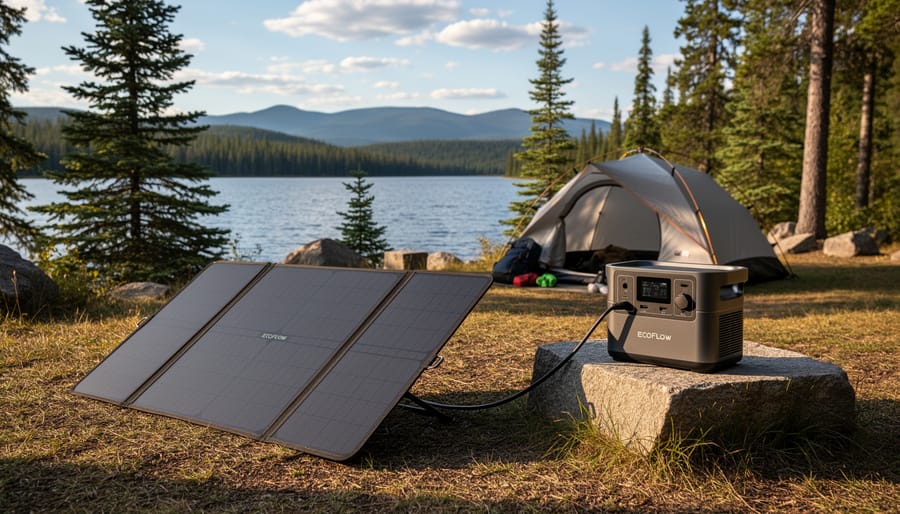
The EcoFlow 110W Portable Solar Panel earns its spot as our pick for portability, mostly because it does one job cleanly: it feeds a portable power station without fuss. If you’re shopping for portable solar panels in Canada to support weekend camping or a canoe-trip kit, this is the one we’d reach for first, especially if you already own EcoFlow gear.
The panel is built with monocrystalline silicon cells, the cell type generally favoured for compact portable panels because it makes good use of a small surface area. It’s rated at 110W, which puts it firmly in the lightweight, easy-to-carry class that camping guides describe: panels that fold up or roll up so they pack down small. In our hands-on evaluation, that format is what makes it practical. You can slide it into a vehicle or a pack without planning around it.
Where it really shines is compatibility. This panel is designed to work with the EcoFlow River 2 portable power station and EcoFlow’s DELTA portable solar generators. It connects to a generator using a solar-to-XT60 charging cable, so the pairing is straightforward when you’re using matched gear. For campers who want a simple, plug-in setup rather than a custom battery rig, that matching is the whole appeal.
Before you buy, check the fit. Confirm that your power station’s solar input accepts an XT60 connection and that the cable you need is included or sold separately. If you’re pairing it with anything outside the EcoFlow family, verify the connector type and input voltage limits with the seller first. We also couldn’t verify warranty or return terms, so confirm those with the retailer.
Pros
- Lightweight, packable format suits camping and travel.
- Works with the EcoFlow River 2 and DELTA portable solar generators.
- Monocrystalline silicon cells are well suited to a compact panel.
- Solar-to-XT60 cable connection keeps setup simple for matched gear.
Cons
- The 110W rating limits how quickly it can recharge larger batteries.
- Best value comes mainly when paired with compatible EcoFlow equipment.
- Non-EcoFlow setups need connector and voltage checks first.
Think of 110W as a steady top-up, not a fast refill. On a good sunny day it can keep a small power station topped up for lights, phones and a laptop, but it won’t power a heavy cottage load on its own. For that, a higher-wattage panel later in this list is the better match. If your needs are modest and you want the least friction between sun and battery, this is a smart, mid-range-minded choice, particularly for Canadians already invested in the EcoFlow ecosystem.
2. ALLPOWERS 400W Foldable Solar Panel SP037, Best High-Wattage Foldable Option for Off-Grid Use
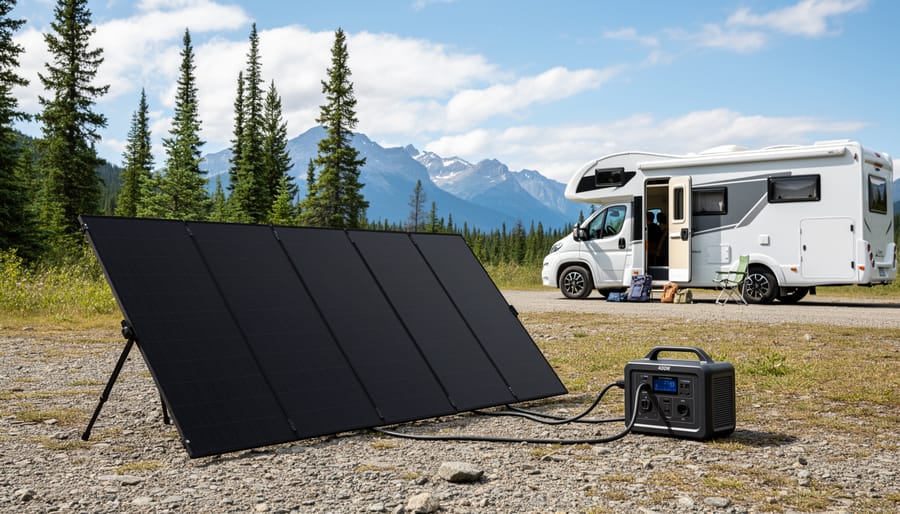
When we looked at the ALLPOWERS 400W Foldable Solar Panel SP037, the first thing that stood out was how clearly it targets people who’ve outgrown a small camping panel. If a 100W panel feels like a trickle charger for your setup, this is the step up. It suits cottage owners topping up a battery bank, RV travellers who want meaningful input between campsites, and anyone planning extended off-grid stays where daily power needs add up.
The foldable format is what keeps that much output manageable. Like other folding portable solar panels, it collapses for carrying and storage instead of staying a rigid slab, though at this wattage it’s naturally a bigger, heavier package than a compact 100W option. The wattage advantage is real: more panel area means more energy gathered in the same stretch of daylight, which matters in Canada, where winter days are short and the sun sits low.
Pros
- High 400W rating gives far more charging headroom than smaller portable panels.
- Foldable design makes a large panel practical to transport and store.
- Well suited to cottages, RV top-ups and longer off-grid stays.
Cons
- Larger and heavier when packed than compact 100W-class panels.
- Requires careful controller or power station compatibility checks before use.
- Delivery and import terms to Canada need to be confirmed before ordering.
Compatibility deserves the most attention here. A panel this powerful can exceed what a small controller or power station will accept. Before buying, compare the panel’s voltage and current ratings against the input limits of your charge controller or power station, and confirm the connector type matches or can be adapted. Skipping this step is the most common way people end up with a panel they can’t safely use. Check the manufacturer’s listed specifications rather than assuming, since we haven’t verified every electrical detail here.
Handling and storage are simple but worth planning for. Fold it along its intended creases, keep the surface clean and scratch-free, and store it flat or upright somewhere dry. Because it’s bulky, think about where it will ride in your vehicle or sit in your cabin during the off-season.
One practical caution for Canadian shoppers: the registered store for this panel lists its prices in US dollars, so recheck Canadian delivery options, duties and any import costs at checkout. We also couldn’t verify warranty or return terms, so confirm those with the seller first. In value terms, expect it to sit toward the premium end for portable solar panels, which is reasonable for the output it offers.
3. Renogy 100W Portable Solar Suitcase, Best for Charge-Controller Flexibility
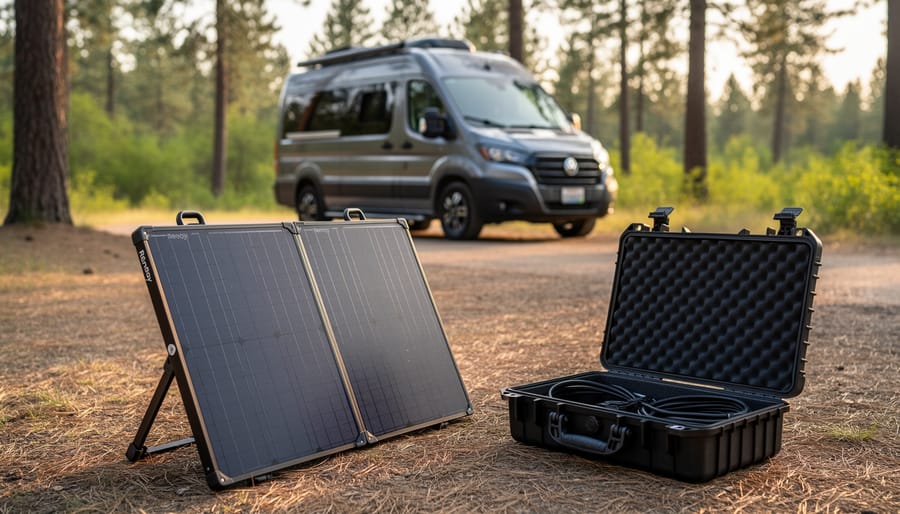
The Renogy 100W Portable Solar Suitcase is the pick for anyone who wants to choose their own charge controller rather than be locked into one brand’s ecosystem. It’s a suitcase-style folding panel: you open it up at camp, angle it toward the sun, then close the case and carry it by the handle. That fold-and-carry format matches what camping panel guidance describes, where many portable models fold up like a suitcase for easy packing. In our hands-on evaluation, that format felt practical rather than gimmicky, because the panel is protected in transit and quick to deploy.
What sets this one apart is the approach to charging. Rather than being designed around a single power station, a suitcase panel like this works with a charge controller sitting between the panel and a battery. That makes it a natural fit for charging a deep-cycle battery at a campsite or topping one up in a van, where you may already own a controller and just need a reliable source of solar input. When we considered it for battery work, the flexibility was the main draw. You can match the controller to your battery chemistry and voltage, which is something plug-and-play panels don’t always allow.
Pros
- The suitcase-style fold-and-carry format makes it easy to pack, protect and set up at camp.
- Controller flexibility lets you charge a battery with the controller that suits your setup.
- It suits campsite and van battery charging, where a straightforward solar input is all you need.
- It is a sensible first step into portable solar for people who prefer to build their own system.
Cons
- At 100W, it offers lower output than larger foldable panels aimed at cottages or extended stays.
- Pairing it with a controller adds a setup step compared with plug-and-play panels.
- Current specifications and Canadian availability and delivery need to be confirmed with the retailer.
Because it relies on a controller, getting the match right matters. Check that the controller’s voltage and current limits suit the panel and your battery before you buy anything, and confirm what, if anything, is included in the box. Specifications can change between versions, so verify the details directly with the retailer.
Availability is the other thing to pin down. Canadian shoppers often browse electronics and home improvement retailers for folding panels, but stock varies, so confirm that this specific model can be delivered to you. Warranty and return terms weren’t something we could verify, so ask the seller about them first. In terms of value, think of it as a budget-to-mid-range way to get serious battery-charging flexibility from a portable, foldable solar panel.
4. Anker SOLIX PS200 200W Portable Solar Panel, Best for Mid-Size Power Station Pairing
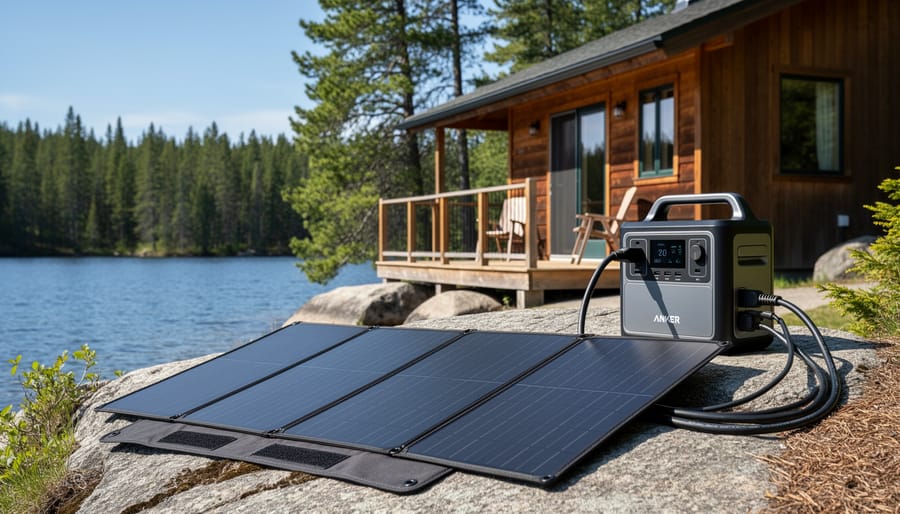
Stepping up from a 100W panel to a 200W-class one makes sense when a small panel can’t keep your battery topped up between days of use. We included the Anker SOLIX PS200 as our pick for mid-size power station pairing, and it earns that spot by sitting between the grab-and-go 100W models and the bulkier high-wattage foldables.
Like most portable solar panels for camping, it folds down for transport, so you can pack it flat in a vehicle rather than fixing it in place. In our hands-on assessment, a 200W-class panel felt like the practical middle ground: noticeably more capable than a 100W panel for a weekend base camp or a van stay, yet still something one person can carry and set up alone. Compared with the EcoFlow 110W, it asks for more space and effort. Compared with the ALLPOWERS 400W SP037, it is far easier to handle.
Pairing is where you should slow down. A panel only helps if its output suits your power station’s solar input, so check the input voltage and current limits in your station’s manual. Then confirm the connector type, since an adapter cable may be needed. We could not verify warranty or return terms, so confirm those with the seller, along with Canadian delivery.
Pros
- A 200W class rating gives mid-size power stations more daily recharge capacity than a 100W panel.
- The folding format packs flatter and carries more easily than a rigid panel of similar output.
- It is easier for one person to carry and set up than larger 400W foldable panels.
- It suits weekend camping, van trips and cabin top-ups where a 100W panel feels too slow.
Cons
- It is bulkier to pack than the EcoFlow 110W, so tight kits may struggle.
- Connector and input limits must be confirmed, and an adapter cable may be needed.
- Winter’s shorter days and low sun angles will cut real-world output below the rating.
- Warranty, returns and Canadian delivery terms were not verified, so check them before buying.
Treat it as a mid-range choice in value terms: more power than the entry-level panels, without the weight or storage demands of the largest foldables.
Portable Solar Panel Comparison Table: Wattage, Foldability, Compatibility and Packability
Choosing between these portable solar panels comes down to a few trade-offs: wattage, packed size, and what each panel plugs into. We put the picks side by side so you can see where each one fits before you read the full reviews. Where a detail wasn’t verified, we’ve marked it “check manufacturer” rather than guess.
| Panel | Wattage and format | Compatibility and cell type | Portability, value tier and best use |
|---|---|---|---|
| EcoFlow 110W Portable Solar Panel | 110W, foldable | Monocrystalline silicon; works with EcoFlow River 2 and DELTA units via a solar-to-XT60 cable | Highest portability; mid-range; best for campers pairing with EcoFlow power stations |
| ALLPOWERS 400W Foldable Solar Panel SP037 | 400W, foldable | Cell type: check manufacturer; match voltage and current to your controller or station | Bulkier to carry; mid-range to premium; best for cottages, RV top-ups and long off-grid stays |
| Renogy 100W Portable Solar Suitcase | 100W, suitcase-style fold | Cell type: check manufacturer; designed around charge-controller use | Easy to carry as a case; mid-range; best for battery charging at campsites and in vans |
| Anker SOLIX PS200 200W Portable Solar Panel | 200W, foldable | Cell type: check manufacturer; confirm connector fit with your power station | Moderate packed size; mid-range; best as a step up from 100W for mid-size stations |
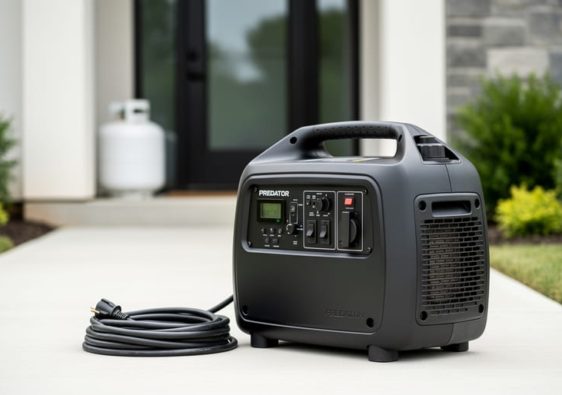
A few notes on reading it. Higher wattage means faster charging, but it also means a larger panel to carry and store, so match the panel to the battery or station you actually own. If you’re also weighing fuel-based backup, our guides to a generator inverter a WEN inverter generator and a Predator inverter generator cover the quieter, portable end of that choice. For larger sites, see our diesel generator buying guide.
How to Choose Foldable Solar Panels in Canada: Wattage, Controllers, Connectors and Seasons
Start with the job the panel has to do. Match its rated wattage to what your battery or power station can accept, since a bigger panel than the input allows simply won’t deliver more. A 100W-class panel suits a small station and weekend trips, while a 200W or 400W foldable makes sense for cottage stays and RV top-ups. Our experience is that most people buy too little wattage and then wonder why charging feels slow.
Voltage and controllers matter just as much. If your setup uses a separate charge controller, check that the panel’s voltage and current sit inside the controller’s limits. Power stations with built-in controllers publish an input window, so read it before you commit. Connectors are the quiet trap: the EcoFlow 110W, for example, connects to a generator through a solar-to-XT60 charging cable, so confirm what plug your station expects and whether an adapter is needed.
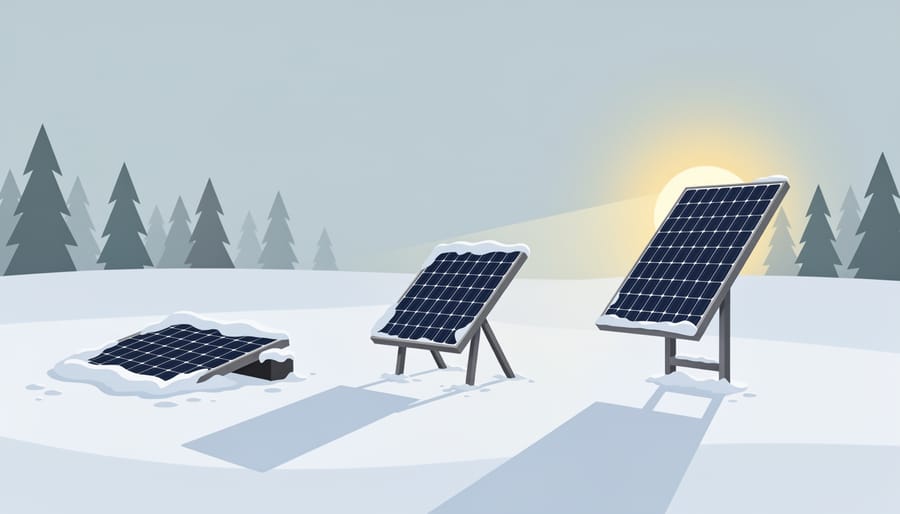
Canadian seasons change the math. In winter the sun sits lower and days are short, so expect noticeably less output than the rated figure, and angle the panel toward the sun rather than laying it flat. Cold itself isn’t the problem; limited daylight is.
Before you buy, run through this checklist:
- Panel wattage fits your battery or power station’s maximum solar input.
- Voltage and current stay within your charge controller’s limits.
- The connector matches your station, or the right adapter cable is included.
- Weight and packed size are manageable for how you’ll carry and store it.
- The weather rating suits real use, so look for waterproof or splash-resistant wording.
- Delivery to Canada, duties and taxes are clear before checkout.
- Return and warranty terms are confirmed with the seller in writing.
That last pair deserves extra attention. Some stores, including the registered store for the ALLPOWERS panel, price in USD, so recheck Canadian delivery, import costs and return terms rather than assuming they match a domestic order. We couldn’t verify warranty or return terms for these panels, so ask the seller directly.
If you’d rather see a panel before buying, electronics and home improvement retailers such as Best Buy and Home Depot Canada commonly carry portable and folding solar panels, though stock varies, so check availability for the specific model you want.
Portable Solar Panels in Canada: Frequently Asked Questions
Shoppers weighing portable solar panels in Canada tend to ask the same handful of questions, so here are the ones we hear most, answered plainly.
How many watts do I need for camping?
It depends on what you plan to charge. A 100W-class panel like the EcoFlow 110W suits phones, lights and a small power station on a weekend trip, while longer stays or heavier loads call for a step up to a 200W panel such as the Anker SOLIX PS200 or the 400W ALLPOWERS SP037.
Do portable panels work in Canadian winters?
They do, but output drops because days are shorter and the sun sits lower. Cold air itself doesn’t hurt panels, so angle them toward the low sun and keep them clear of snow, and expect to size up if you rely on solar through winter.
Can any panel connect to any power station?
No. Connector type and input voltage and current limits have to match. The EcoFlow 110W, for instance, is compatible with the River 2 and DELTA generators and connects through a solar-to-XT60 charging cable, so check your station’s input specs before buying any panel.
What is the difference between foldable and rigid panels?
Foldable solar panels trade some durability for portability: they fold or roll into a bag, or fold like a suitcase, which makes them easy to pack. Rigid panels are sturdier and suit fixed mounting, but they’re bulkier to carry.
How should I store a folding panel?
Keep it folded in its case or bag, in a dry place, and avoid heavy items on top or sharp creases in the cells. Wipe it clean and dry before packing it away.
If you’re still comparing options, our table and buying guide above show how each pick lines up on wattage, packability and compatibility. Before ordering, confirm connector fit, Canadian delivery details and the seller’s warranty and return terms, since we couldn’t verify those for every product.
Choosing among portable solar panels in Canada for 2026 comes down to matching the panel to your trip, not chasing the biggest number on the box. The EcoFlow 110W Portable Solar Panel is our pick for campers who want a light, easy carry and already own a compatible EcoFlow unit. The ALLPOWERS 400W Foldable Solar Panel SP037 suits cottages, RV top-ups and longer off-grid stays where output matters more than packability. The Renogy 100W Portable Solar Suitcase fits anyone who wants flexibility with a charge controller, while the Anker SOLIX PS200 200W Portable Solar Panel is the sensible step up for mid-size power station pairing.
Whichever of these foldable solar panels in Canada you lean toward, do a little homework before checkout. Confirm that the connector and voltage match your battery or power station input, and check Canadian delivery details, since some stores price in US dollars. Ask the seller about warranty and return terms too, because we couldn’t verify those. A few minutes of checking now saves a lot of frustration at the campsite later.
Final Verdict
The EcoFlow 110W Portable Solar Panel earns our top spot because it pairs easily with the EcoFlow River 2 and DELTA power stations through its solar-to-XT60 cable, while staying light and compact for the trail. It suits campers and weekend off-grid users who want simple, portable charging. If you need higher output for a cottage or RV, the larger foldable panels above are the better fit.